
 Save
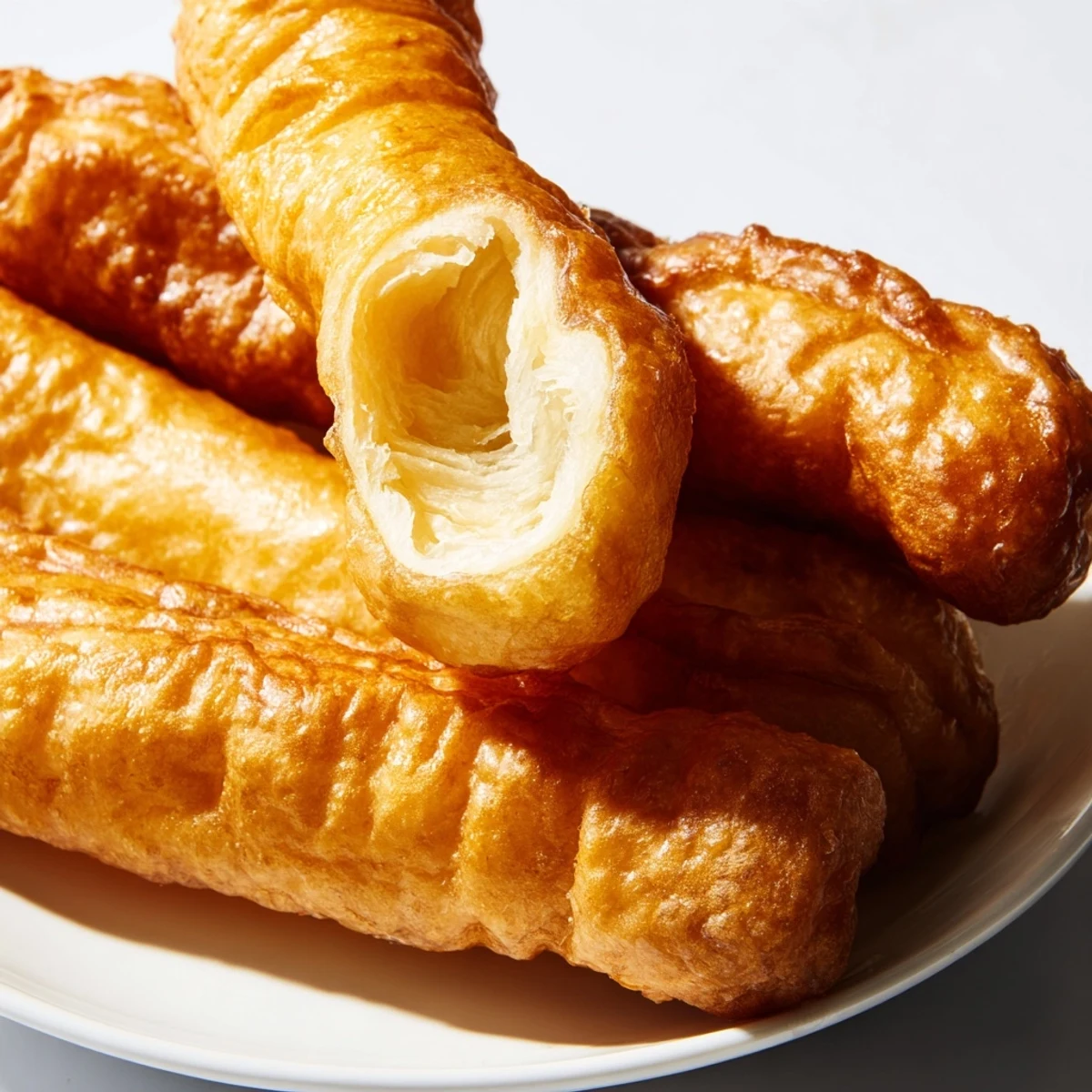
Save Youtiao are beloved Chinese breakfast treats - deep-fried dough sticks that achieve the perfect contrast between shatteringly crisp exterior and pillowy soft interior. The magic lies in the two-stage resting process and pairing dough strips before frying, which creates their signature hollow center.
These golden beauties transform breakfast into something special. The outside develops a deep golden crunch while steaming soft inside, creating that irresistible texture combination. Fresh from the fryer, they're simply irresistible dipped in sweetened soy milk or alongside savory congee.
The technique is straightforward but requires patience. After mixing a simple dough, let it rest twice to develop texture. The unique step involves pressing two dough strips together before stretching and frying - this creates the characteristic hollow center that youtiao are famous for.
The steam rising from a paper bag of fresh youtiao on a busy Beijing morning sticks with me somehow. I'd duck into this tiny corner shop where the owner worked two woks simultaneously, flipping golden dough sticks with weathered hands while calling out orders. That first bite through the shattering exterior into the pillowy soft center made everything else fade away. Bringing that experience home seemed impossible until I realized the secret wasn't some mysterious technique but patience and proper temperature.
My first attempt produced dense chewy sticks that more resembled breadsticks than the ethereal street food version I craved. The problem was rushing the proof and frying at too low a temperature. But when I finally let the dough rest fully and waited for that perfect 375 degree oil, watching them puff up like magic made all those failed attempts worth it. Now my kitchen smells like that Beijing corner shop.
Ingredients
- Allpurpose flour: The protein structure creates the framework that traps steam during frying resulting in those signature air pockets
- Baking powder and baking soda: This double acting leavening combination ensures the dough puffs dramatically when it hits the hot oil
- Salt: A full teaspoon might seem generous but it balances the sweetness and prevents the finished sticks from tasting flat
- Sugar: Just enough to promote browning without making these sweet it creates beautiful golden color
- Egg: Adds richness and helps create that tender interior texture while providing structure
- Room temperature water: Using water that is not too cold helps the dough develop properly without shocking the yeast free leavening
- Vegetable oil: A neutral oil with high smoke point is essential both in the dough and for achieving that crispy fried exterior
Instructions
- Mix the dry foundation:
- Whisk together the flour baking powder baking soda salt and sugar in a large bowl until completely combined creating an even distribution of leavening
- Form the shaggy dough:
- Create a well in the center then add the egg water and 2 tablespoons oil mixing with a spatula until a rough sticky dough forms
- First brief knead:
- Knead the dough right in the bowl for just 1 or 2 minutes until it comes together then cover and let it rest for 15 minutes to relax the gluten
- Second smooth knead:
- With lightly oiled hands knead the dough on an oiled surface for 2 to 3 minutes until it becomes smooth and elastic then return it to the bowl
- Essential resting period:
- Cover the dough and let it rest at room temperature for a full hour allowing the flour to fully hydrate and the gluten to develop completely
- Shape into strips:
- Roll or press the dough into a half inch thick rectangle then cut into strips about 1 inch wide and 5 inches long
- Create the signature pair:
- Place two strips on top of each other and press firmly down the center with a chopstick or knife handle to fuse them together
- Heat the oil:
- Bring 4 cups of oil to exactly 375 degrees F in a deep pot using a thermometer to ensure proper temperature
- Stretch and fry:
- Gently stretch each dough pair to about 8 inches then carefully lower 2 or 3 at a time into the hot oil turning constantly until puffed and golden brown
- Drain and serve:
- Transfer the finished youtiao to a wire rack or paper towels to drain briefly then serve while still warm for the best texture
 Save
Save My kids now wait by the stove watching for that golden color transformation and stealing the first warm stick before they even hit the paper towels. Something about making these together connects us to that Beijing morning memory I carried home. Food does that sometimes carrying places and moments across oceans in a simple strip of fried dough.
The Secret to Maximum Puff
The chopstick indentation down the center of each dough pair does more than just hold the two strips together. It creates a weak point that encourages the dough to separate and puff outward dramatically when it hits the hot oil. Press firmly but do not cut completely through the layers.
Oil Temperature Mastery
Keeping your oil at 375 degrees F is not just a suggestion but the critical factor between light airy youtiao and dense oily sticks. If the temperature drops too low the dough absorbs oil and becomes heavy. If it is too hot the exterior burns before the interior cooks through. Fry in small batches to maintain consistent heat.
Serving and Storing
Youtiao are best enjoyed immediately while still warm and at their crispiest though they can be reheated in a 350 degree F oven for a few minutes to restore some crunch. They never freeze well as the texture becomes disappointingly chewy. Plan to enjoy these fresh the same day you make them.
- Dip them into sweetened warm soy milk for a classic breakfast combination
- Tear pieces into congee letting them soak up the warm rice porridge
- Serve alongside soft scrambled eggs for a fusion breakfast approach
 Save
Save There is something deeply satisfying about pulling a perfectly puffed golden stick from hot oil knowing you have recreated a tradition that spans generations. Your kitchen is about to smell amazing.
Recipe FAQ
- → What makes youtiao different from regular doughnuts?
-
Youtiao differ from Western doughnuts in their texture and shape. They're elongated sticks rather than rings, with a signature hollow center created by pressing two dough strips together before frying. The exterior becomes exceptionally crispy while remaining light and airy inside, without the sweetness typical of doughnuts.
- → Why is the dough rested twice during preparation?
-
The first 15-minute rest allows gluten to relax after initial mixing, making kneading easier. The full hour rest enables the dough to develop proper structure and become workable. This resting process is crucial for achieving the characteristic puffy, hollow interior when fried.
- → Can I make these ahead of time?
-
Youtiao are best enjoyed fresh and warm for optimal crispiness. However, you can prepare the dough ahead and refrigerate overnight after the first rest. Let it come to room temperature before rolling and cutting. Already fried sticks can be reheated in a 350°F oven for 5 minutes to restore some crispiness.
- → What's the purpose of pairing two dough strips together?
-
Pressing two strips together creates a seam that separates during frying, resulting in the signature hollow center. This technique allows each stick to puff dramatically while maintaining that light-as-air interior. Without this step, you'd get denser, bread-like results.
- → How do I know when the oil is at the right temperature?
-
Use a kitchen thermometer to maintain 375°F (190°C). If you don't have one, test by inserting a wooden chopstick - bubbles should form rapidly around it. Oil that's too cool results in greasy, soggy sticks; oil that's too hot burns the exterior before the inside cooks through.
- → What should I serve with youtiao?
-
Traditionally, youtiao are served with warm sweetened soy milk for dipping - the contrast between savory fried dough and sweet creamy milk is divine. They're also perfect alongside congee (rice porridge), adding texture and crunch to the soft, warming porridge. Some enjoy them plain while still hot from the fryer.