
 Save
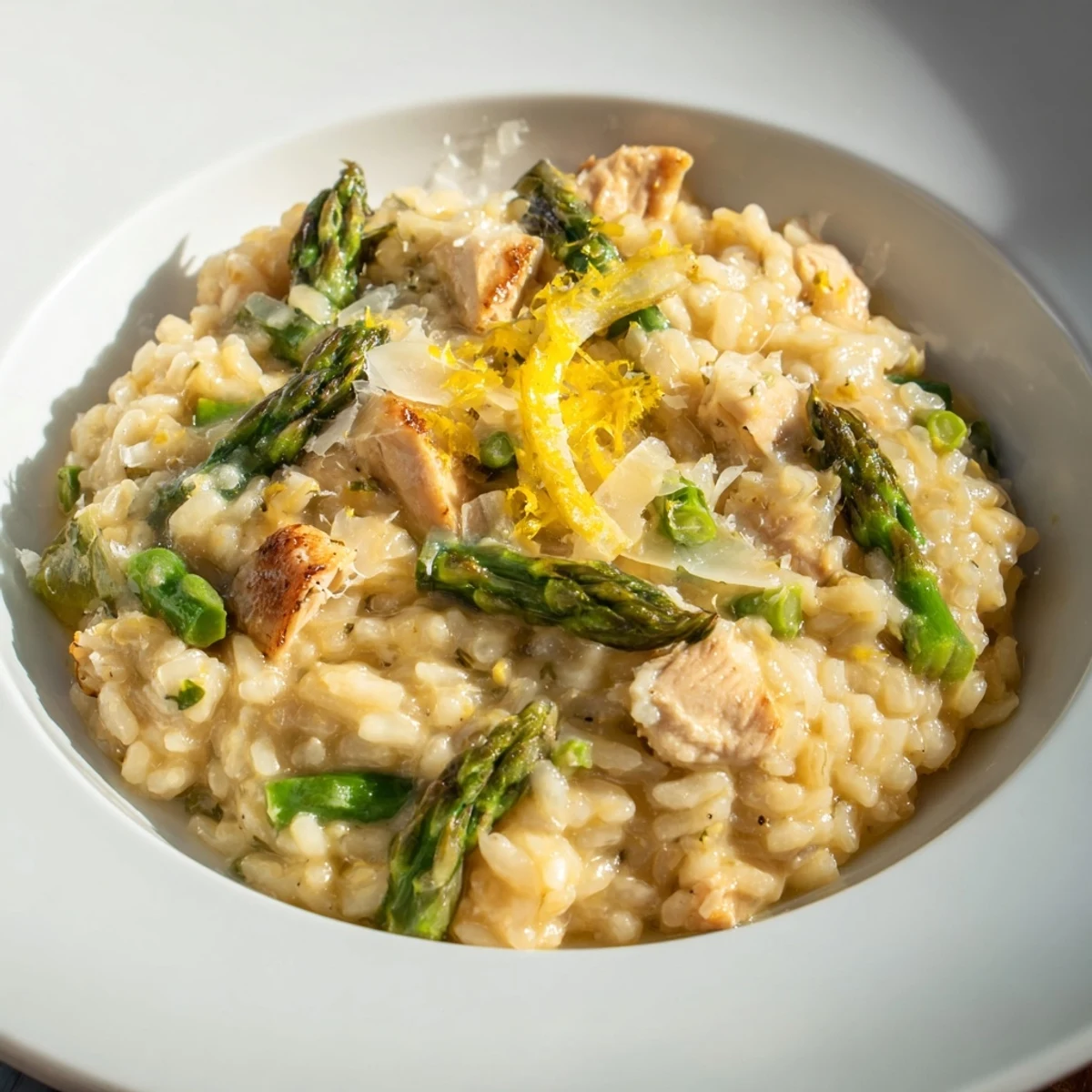
Save This Italian-inspired dish transforms Arborio rice into a velvety canvas for tender chicken and vibrant asparagus. The traditional slow-cooking method creates that signature creamy texture while maintaining the rice's satisfying bite. A splash of white wine adds depth, while fresh lemon zest brightens each spoonful. Perfect for gatherings or meal prep, this risotto delivers restaurant-quality comfort food in under an hour.
The first time I attempted risotto, I stood at the stove for what felt like forever, convinced I was doing it wrong because the recipe said to stir constantly. My arm actually started cramping up around minute twelve, but then something magical happened, the rice transformed from individual grains into this wave of creamy perfection that I had only tasted in restaurants.
I made this for my sister last winter when she was recovering from surgery, and she still messages me asking when I will make it again. Something about the warmth and the way the lemon zest brightens everything just makes people feel taken care of.
Ingredients
- Chicken breasts: Diced into bite sized pieces, these provide protein and become tender and flavorful when cooked first.
- Arborio rice: This short grain Italian rice is essential for risotto because it releases high starch creating that signature creamy texture.
- Asparagus: Trimmed and cut into small pieces so they cook evenly in the rice, adding fresh spring flavor and beautiful color.
- Chicken stock: Keeping it warm is crucial because adding cold stock would shock the rice and affect the cooking process.
- White wine: Adds acidity and depth, deglazing the pan after toasting the rice.
- Butter and Parmesan: These finish the risotto, creating that luxurious emulsion that makes restaurant risotto so irresistible.
- Lemon zest: Brightens the whole dish and cuts through the richness, making every bite feel lighter.
Instructions
- Sear the chicken:
- Heat olive oil in a large heavy saucepan over medium heat, season the diced chicken generously with salt and pepper, and cook until browned and cooked through about five to six minutes. Remove the chicken and set it aside, leaving those flavorful browned bits in the pan.
- Build the flavor base:
- Add one tablespoon butter to the same pan and sauté the onion until translucent and fragrant, about three minutes, then stir in the garlic and cook for just one minute more until you can smell it.
- Toast the rice:
- Add the Arborio rice and cook, stirring constantly, for about two minutes until the grains look slightly translucent around the edges and smell nutty and toasted.
- Deglaze with wine:
- Pour in the white wine and stir until it is completely absorbed, scraping up any browned bits from the bottom of the pan.
- Begin the risotto rhythm:
- Add the warm chicken stock one ladleful at a time, stirring frequently and waiting until each addition is almost completely absorbed before adding the next. Continue this process for about fifteen minutes, letting the rice release its starch.
- Add the asparagus:
- Stir in the asparagus pieces and continue adding stock and stirring for another ten minutes, until the rice is creamy and al dente with a slight bite in the center and the asparagus is just tender.
- Finish and serve:
- Return the chicken to the pan, then stir in the remaining butter, Parmesan cheese, and lemon zest until everything is combined and glossy. Let it rest covered for two minutes off the heat, then serve immediately with extra Parmesan.
 Save
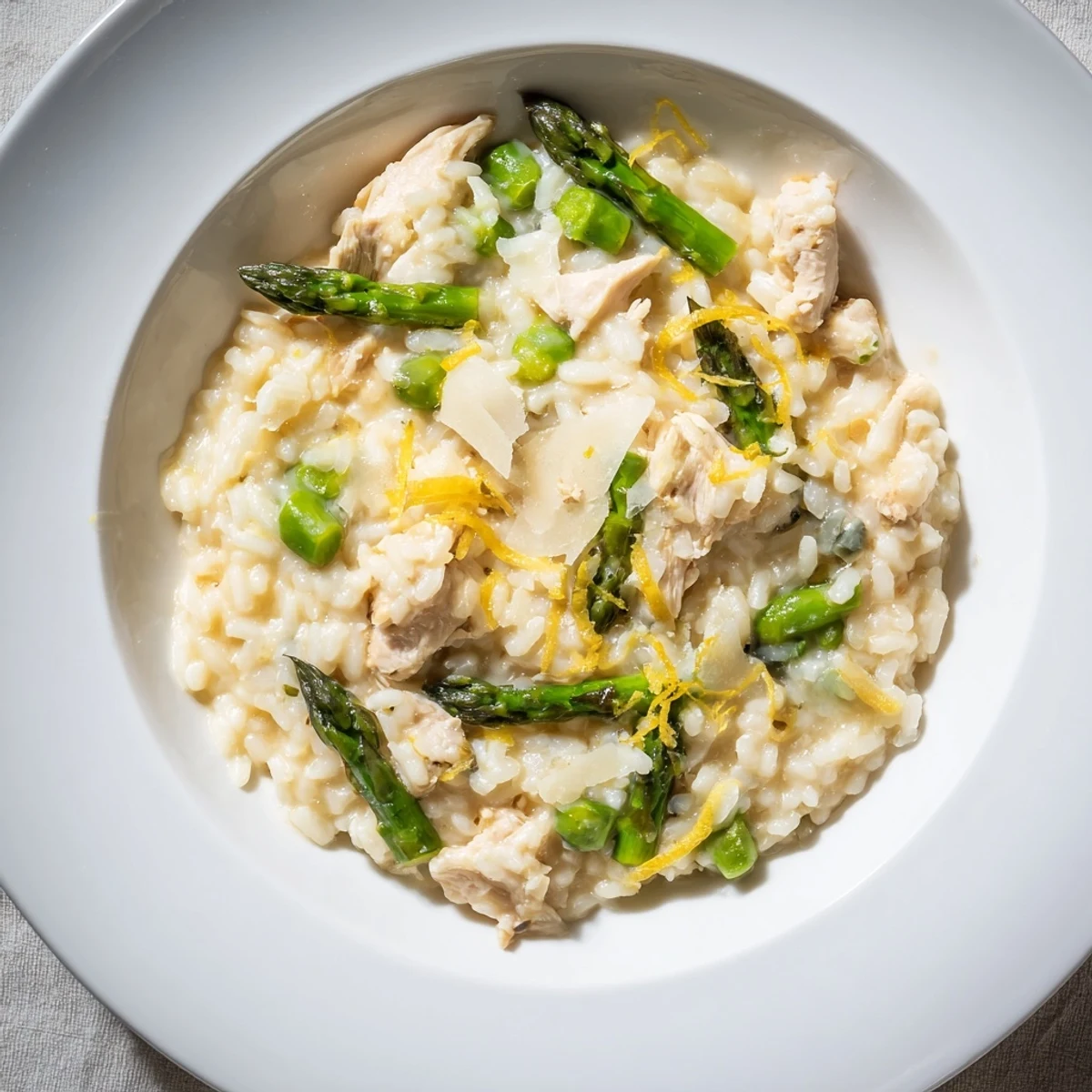
Save My partner usually stands nearby while I make this, topping up my wine glass and occasionally taking a turn stirring when my arm gets tired. It has become one of those recipes that feels like an event rather than just dinner.
Getting The Texture Right
The secret is resisting the urge to rush the stock additions. When you add too much liquid at once, the rice cooks unevenly and you lose control over the texture. Take your time and let the rice tell you when it is ready for more.
Making It Ahead
You can cook the rice until it is slightly underdone, spread it on a baking sheet to cool, and finish it later with more stock. This restaurant technique works beautifully when you are serving a crowd.
Variations And Substitutions
Swap the asparagus for peas in spring or mushrooms in fall for a completely different vibe. You can also make this vegetarian by using vegetable stock and adding more vegetables instead of chicken.
- Peas work beautifully and do not need trimming, just throw them in frozen during the last few minutes.
- Mushrooms should be sautéed with the onions to develop their flavor before adding the rice.
- For extra protein, stir in shredded rotisserie chicken at the end instead of cooking raw chicken breast.
 Save
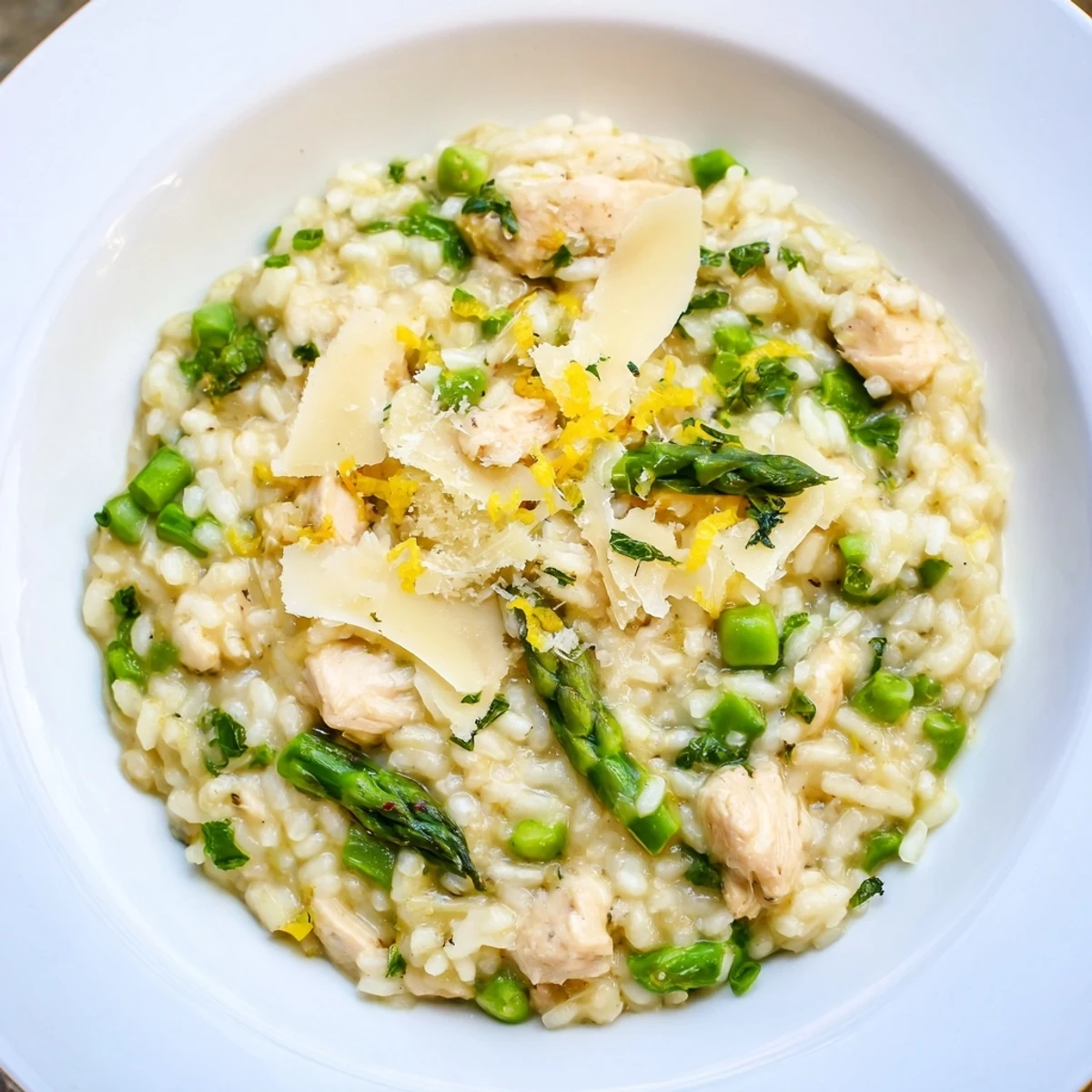
Save Risotto waits for no one, so have your plates warmed and your table ready before you finish. There is nothing quite like the moment everyone takes that first creamy bite and the room goes quiet.
Recipe FAQ
- → Why is my risotto rice still crunchy after cooking?
-
The rice likely needs more liquid and cooking time. Continue adding warm stock ladle by ladle, stirring frequently until the grains are tender but still maintain a slight firmness at the center.
- → Can I make this ahead of time?
-
Risotto is best served immediately, but you can prep ingredients in advance. Dice the chicken, chop vegetables, and measure everything beforehand. The actual cooking should happen just before serving for optimal texture.
- → What can I substitute for white wine?
-
Replace white wine with additional chicken stock or verjus. The wine adds acidity and depth, so if skipping it, consider adding a splash of lemon juice along with the zest.
- → How do I store leftovers?
-
Cool completely and refrigerate in an airtight container for up to 3 days. Reheat gently with a splash of broth or water to restore creaminess. The texture will be slightly thicker than fresh.
- → Can I use brown rice instead of Arborio?
-
Brown rice won't produce the same creamy result since it lacks the high starch content of Arborio. For a similar texture, you could try carnaroli or vialone nano rice, which are traditional alternatives.