
 Save
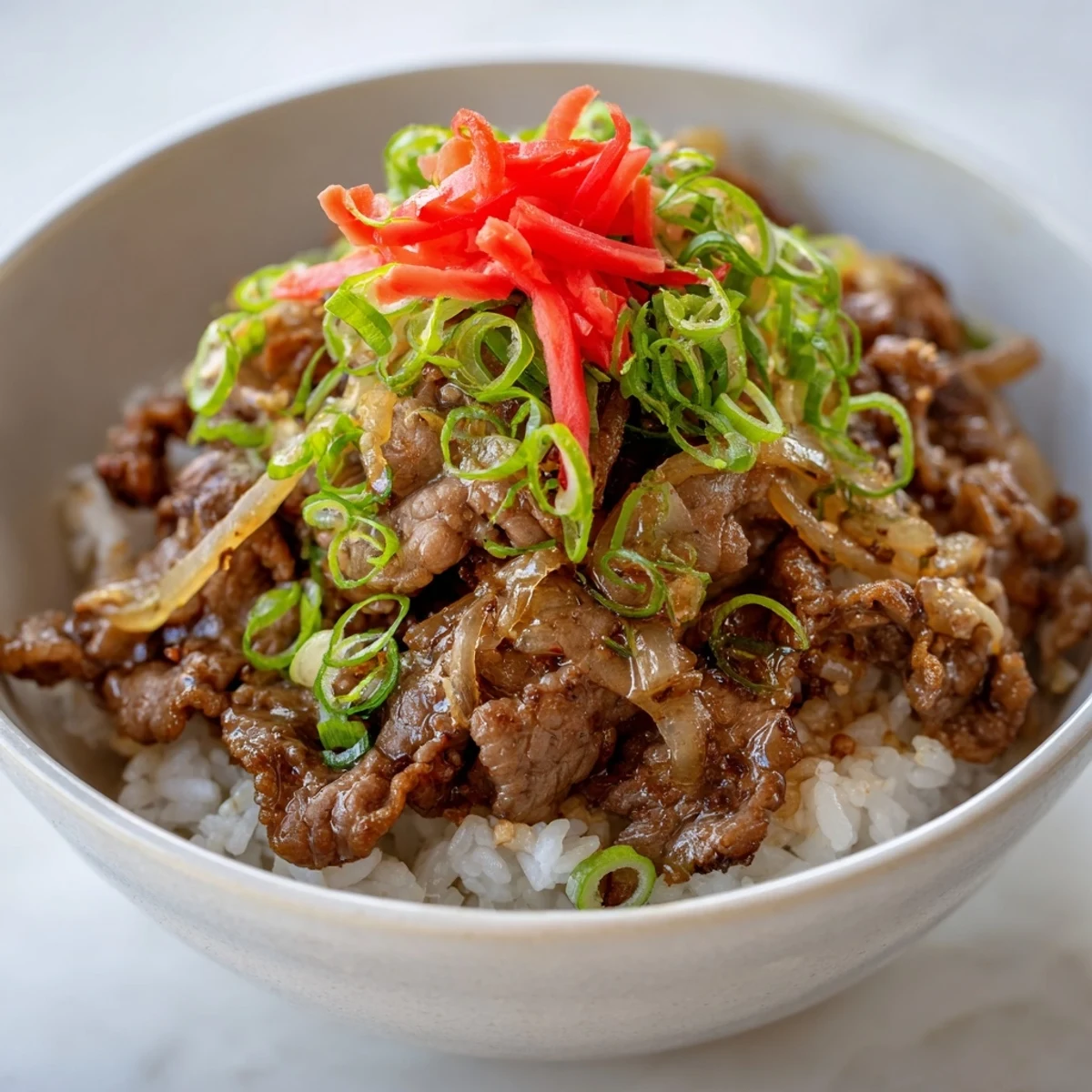
Save This dish features thinly sliced beef cooked gently with onions in a savory sauce made from dashi, soy sauce, mirin, and sake. Served atop perfectly steamed short-grain rice, it balances rich umami flavors with tender textures. Quick to prepare, it's garnished with spring onions and optional pickled ginger for freshness. Ideal for a satisfying, easy Japanese-inspired meal with simple ingredients and straightforward steps.
There's something about the smell of beef hitting hot oil that takes me straight back to a cramped kitchen in Tokyo, watching my friend's mother work with such effortless speed. She'd have rice steaming, beef sizzling, and that glossy sauce coming together in what felt like moments, while I stood there mesmerized by how simple it all was. That moment sparked an obsession with gyudon, and now it's become my go-to when I need something that feels both comforting and exciting on a weeknight.
I made this for my roommate on a rainy Sunday when she was feeling under the weather, and I'll never forget how her face lit up when I set that steaming bowl in front of her. She said it tasted like care, which sounds cheesy, but honestly, that's what this dish does—it makes people feel looked after. That's when I knew this wasn't just a recipe I liked, it was one worth perfecting.
Ingredients
- Thinly sliced beef (500 g): Sirloin or ribeye works beautifully because the thin slices cook in minutes and drink up the sauce like they were made for it.
- Short-grain white rice (2 cups): This rice has just enough starch to hold together and catch the sauce without getting mushy.
- Dashi stock (1 cup): It's the backbone of the flavor, and if you can't find it, beef broth works, though you'll lose some delicate umami depth.
- Soy sauce (1/4 cup): Use quality soy sauce here—it's a main player, not a supporting role.
- Mirin (2 tbsp): This sweet rice wine balances the saltiness and gives everything a subtle shine.
- Sake (2 tbsp): It mellows the sauce and adds a quiet sophistication that makes people ask what you did differently.
- Sugar (1 tbsp): A touch of sweetness that rounds out the savory notes without making it candy-like.
- Large onion, thinly sliced: Onions soften into sweet strands that practically melt into the sauce.
- Spring onions (2), finely sliced: Fresh brightness at the end, cutting through the richness like a breath of air.
- Pickled ginger (optional): This optional garnish is actually essential—it adds a sharp, clean note that makes the whole bowl come alive.
- Vegetable oil (1 tbsp): High heat oil keeps the beef sear from sticking.
Instructions
- Prep your rice:
- Rinse the rice under cold water, stirring gently with your fingers, until the water runs clear—this removes the starch and prevents gumminess. Combine with water in a rice cooker or saucepan and start cooking.
- Heat your pan:
- While rice cooks, warm vegetable oil in a large skillet over medium heat until it shimmers slightly. You want it hot enough that the beef won't stick but not smoking.
- Soften the onion:
- Add sliced onion to the hot oil and sauté for 2-3 minutes, stirring occasionally, until it turns translucent and releases its sweetness. The kitchen will smell amazing at this point.
- Make the sauce:
- In a small bowl, whisk together dashi stock, soy sauce, mirin, sake, and sugar until the sugar dissolves. Pour this into the pan with onions and bring to a gentle simmer—you want tiny bubbles, not a rolling boil.
- Add the beef:
- Spread the sliced beef evenly across the simmering sauce, breaking it apart gently with your spoon as it cooks. After 5-7 minutes, the beef will be just cooked through and tender, and any foam can be skimmed off.
- Assemble your bowl:
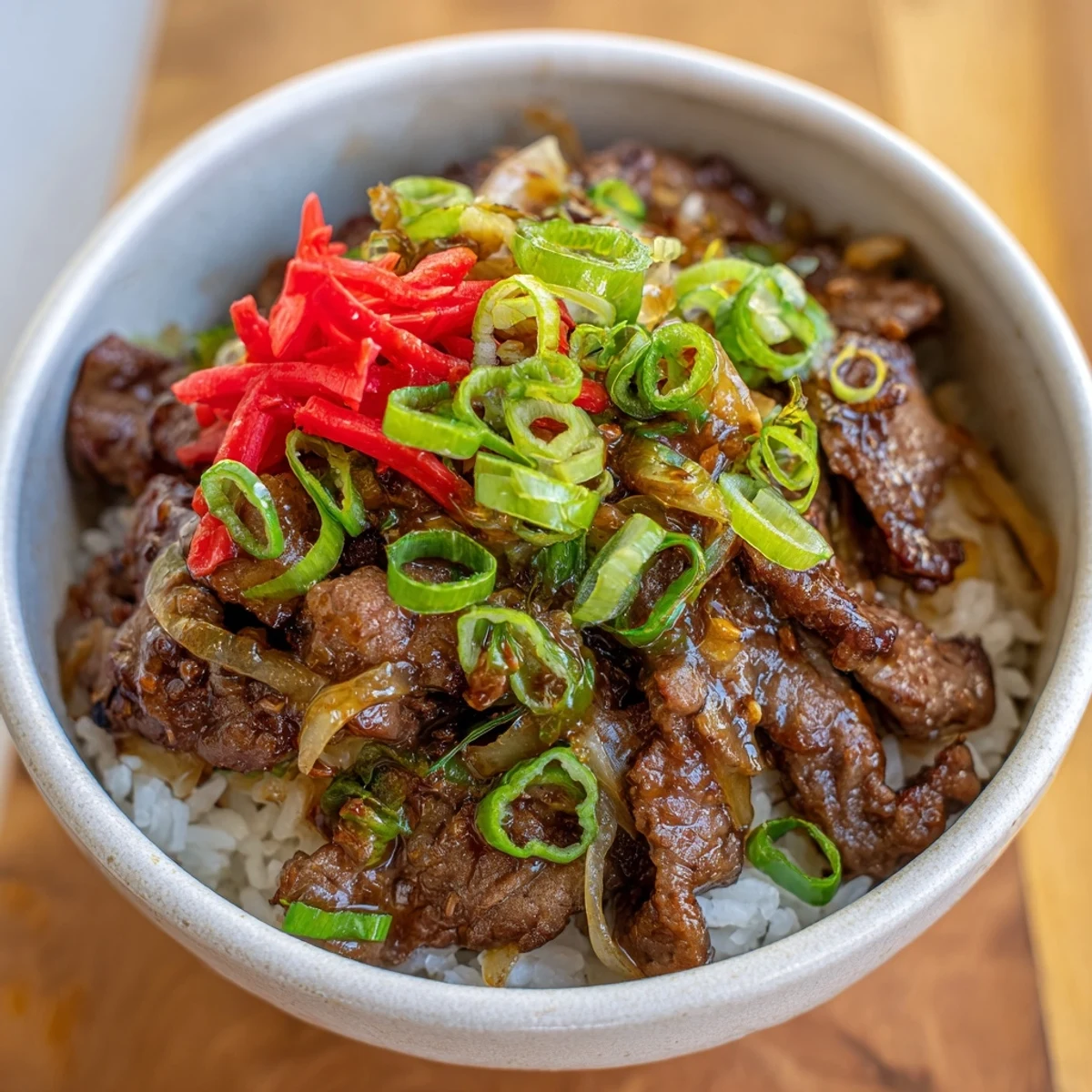
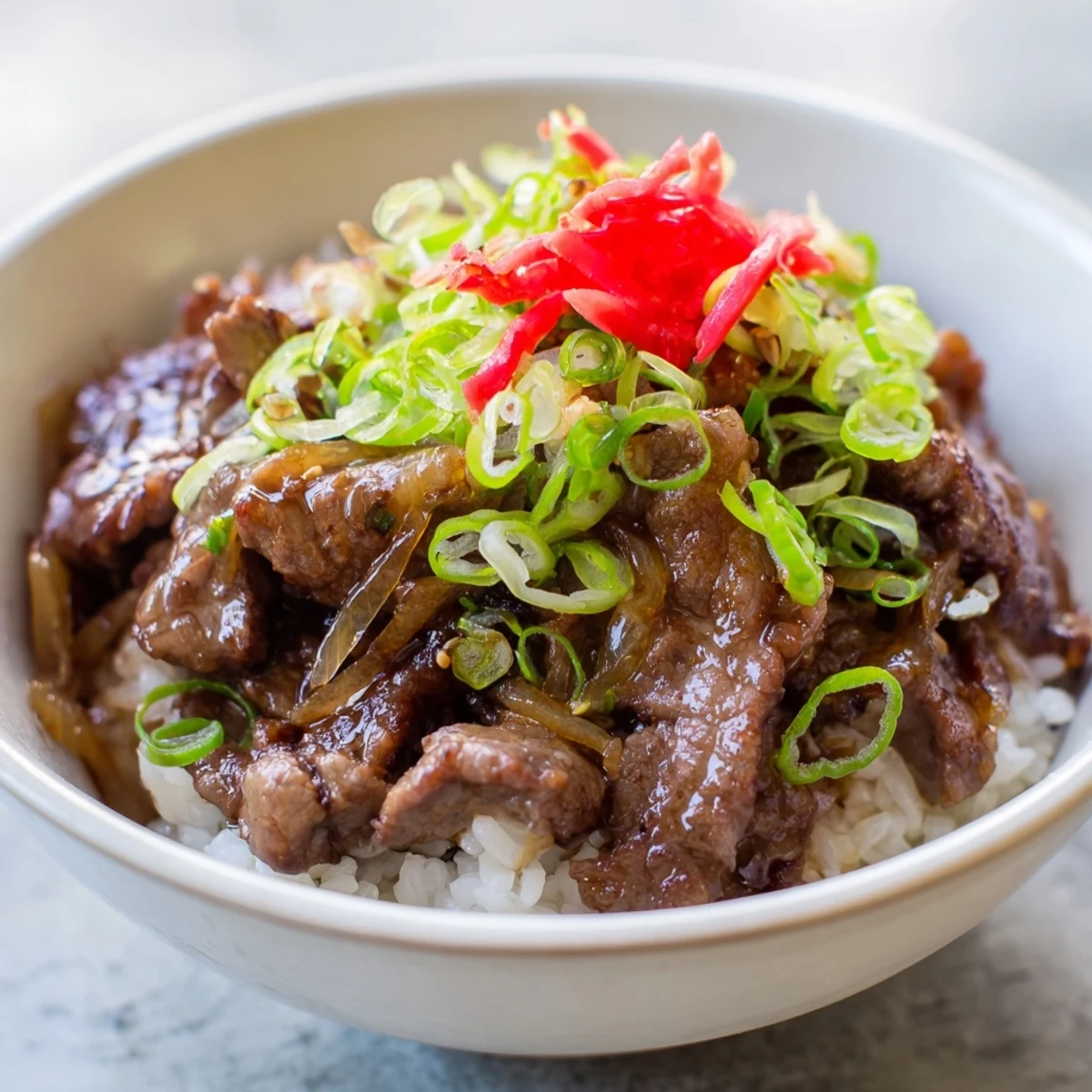
- Fluff the cooked rice and divide it among serving bowls, then generously spoon the beef and onion mixture with sauce over each portion. Top with spring onions and a small pile of pickled ginger if you have it.
 Save
Save There's a moment when my partner takes the first bite of this and closes their eyes, and in that quiet second, I remember why I cook. It's not about impressing anyone or proving something; it's about that simple joy of feeding someone something that makes them happy. This bowl does that every single time.
Building Layers of Flavor
The genius of gyudon is that it's not trying to be complicated. The sauce is umami-rich from the dashi and soy, but it's sweetened just enough to feel comforting rather than heavy. The onions caramelize softly in the sauce and become almost jammy, while the beef stays tender because it's never fussed over—you add it and let the gentle simmer do the work. Each component supports the others rather than competing for attention.
Why This Works as Comfort Food
There's science behind why this bowl feels so satisfying: the combination of protein and carbs keeps you full, the savory sauce triggers satisfaction, and the whole thing is warm and aromatic. But honestly, it works because it asks nothing fancy of you and delivers everything at once. You're not juggling multiple dishes or worrying about timing—it's just one bowl with everything you need, which somehow makes it feel both luxurious and easy.
Making It Your Own
This recipe is flexible enough to adapt to what you have on hand or what you're craving. Add a soft-poached egg on top for richness, sprinkle shichimi togarashi if you want heat, or stir in some sautéed mushrooms for earthiness. The framework stays the same, but the variations are endless.
- For gluten-free cooking, swap soy sauce for tamari—it has the same depth without wheat.
- A small bowl of pickled ginger on the side lets people add as much or as little bite as they like.
- Leftover beef and sauce keep for a few days and reheat beautifully, making this great for meal prep.
 Save
Save This bowl has become something I turn to when I want to feel like I'm taking care of myself without the fuss. It's quick enough for a busy weeknight but feels special enough for company, which is the sweet spot for any recipe worth keeping around.
Recipe FAQ
- → What type of beef is best for this dish?
-
Thinly sliced sirloin or ribeye works best, as it cooks quickly and remains tender.
- → Can I substitute dashi stock?
-
Yes, beef or vegetable broth can be used as an alternative without compromising flavor.
- → How is the rice prepared?
-
Rinse short-grain rice until clear, then cook it with water using a rice cooker or on the stovetop for fluffy results.
- → What garnishes complement this bowl?
-
Sliced spring onions and pickled ginger add freshness and a slight tang that balance the savory beef.
- → Can this dish be made gluten-free?
-
Using tamari instead of soy sauce creates a gluten-free version suitable for sensitive diets.