
 Save
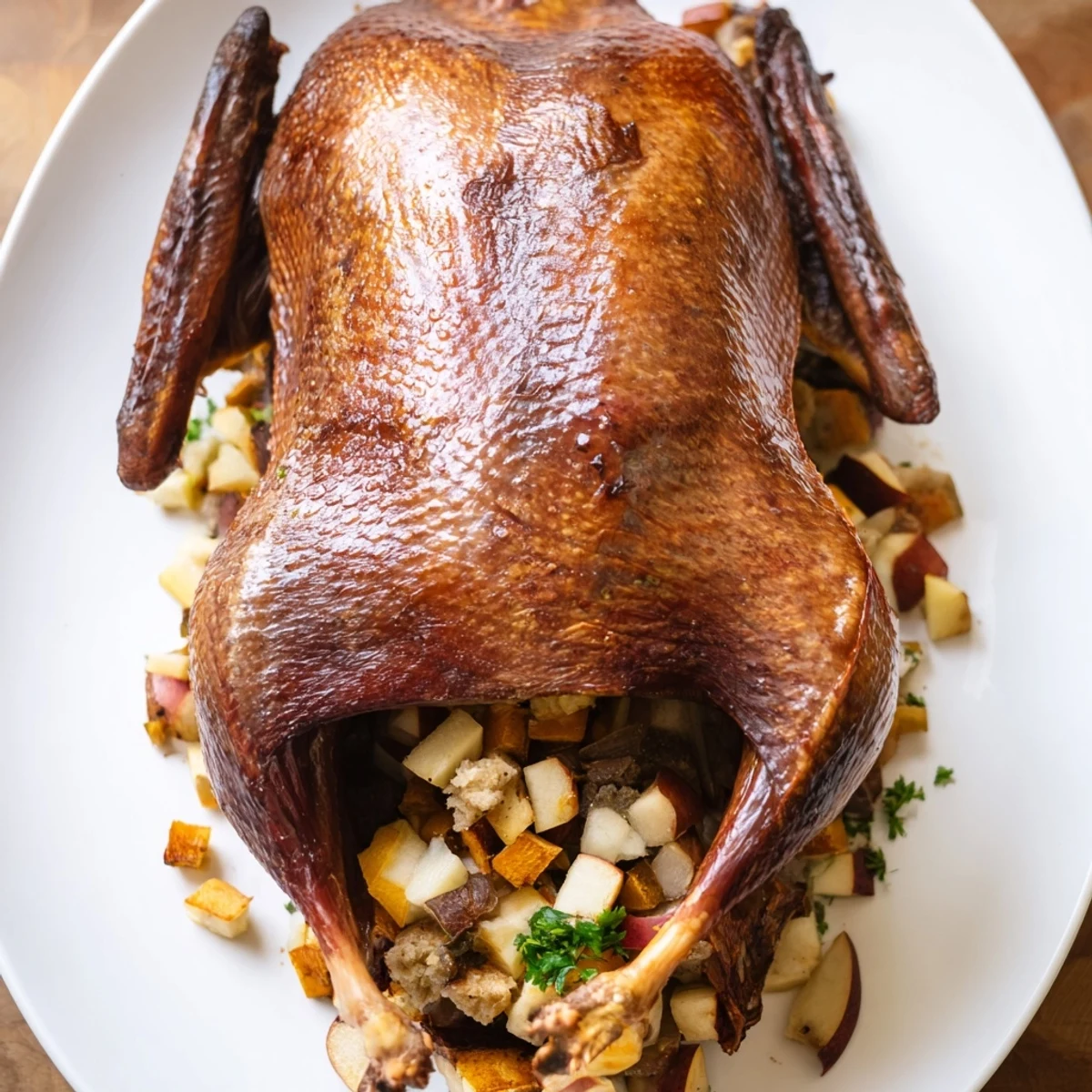
Save This festive main dish highlights a whole goose roasted to perfection, featuring a golden, crisped skin and a savory herb stuffing balancing fresh parsley, sage, and thyme. The bird is seasoned inside and out, stuffed loosely to retain moisture, and basted regularly during its slow oven roast to enhance texture and flavor. Allowing it to rest ensures juicy, tender slices, ideal for holiday gatherings or special occasions.
The first time I roasted a whole goose, I was terrified. My grandmother had done it countless times, and I remember watching her move through the kitchen with such confidence, her hands working the bird like she'd known it her entire life. Years later, when I finally gathered the courage to try it myself, I realized that goose wasn't something to fear, but something to respect. The result was magnificent, and now I find myself returning to this recipe whenever I want to create something truly special at the table.
I'll never forget the Christmas Eve when my kitchen was chaos, with unexpected guests arriving and me realizing I'd committed to roasting a goose. But something clicked that afternoon, maybe it was the smell of sage and thyme as they toasted in the butter, or the way the goose's skin started that gorgeous transformation in the oven. By the time dinner was served, everyone at the table understood why this bird has graced festive tables for centuries.
Ingredients
- Whole goose (4–5 kg): This is the star, and its quality matters. Look for a bird with good fat coverage, as that's what gives you the crispy skin everyone dreams about. I always pat mine completely dry before seasoning, as moisture is the enemy of crispness.
- Kosher salt and ground black pepper: Season generously both inside and out. The salt draws out moisture early, which actually helps that skin crisp up beautifully.
- Orange and onion: These go inside the cavity and perfume the meat from within. They don't get eaten, but they do all the flavor work.
- Stale white bread: This is crucial. Fresh bread becomes mushy. Stale bread holds its texture and soaks up all those delicious pan juices.
- Unsalted butter: It's the foundation of the stuffing. Melted butter coats every bread cube, making the stuffing tender and rich.
- Fresh herbs, parsley, sage, and thyme: These are non-negotiable. Dried herbs fade during the long cooking time, so fresh is where the magic lives.
- Eggs and chicken stock: The egg binds everything together while the stock keeps the stuffing moist throughout roasting.
Instructions
- Get Everything Ready:
- Preheat your oven to 180°C (350°F). This is where patience begins. While it heats, pat your goose completely dry with paper towels. This step is meditation. Feel the texture of the skin, trim any excess fat from the neck and cavity, and lay it all out on your counter. You're preparing a bird for transformation.
- Season with Purpose:
- Season the inside and outside of the goose with salt and pepper. Don't be shy here. Tuck those orange and onion quarters into the cavity. You're building layers of flavor.
- Build the Stuffing:
- In a large bowl, combine your bread cubes with melted butter until every piece is coated. This is when your kitchen starts to smell incredible. Add the chopped onion, celery, apples, parsley, sage, thyme, and marjoram. Mix with your hands, feeling how the herbs distribute throughout. Stir in the beaten egg and chicken stock, tasting as you go and adjusting salt and pepper. The stuffing should be moist but not wet.
- The Part Where Magic Happens:
- Loosely stuff the herb mixture into the goose cavity. I always say loosely because the stuffing expands as it cooks, and you want it to breathe. If you have extra, bake it separately in a small dish alongside the goose for those who want extra.
- Prepare for Roasting:
- Tie the legs together with kitchen twine and tuck the wings underneath the body. Place the goose breast-side up on a rack in your roasting pan. Pour 250 ml water into the pan. This steam will help keep the meat moist while the skin crisps.
- The Long Roast:
- Roast for 2 hours 30 minutes, and here's where attentiveness matters. Every 30–40 minutes, baste with the pan juices. This is the sound of a successful dinner party, that basting brush moving back and forth, the sizzle of hot fat meeting hot bird. After about 1 hour, prick the skin with a fork, avoiding the meat. You're letting fat escape so the skin can crisp. If browning happens too quickly, cover loosely with foil. The goose is done when a thermometer reads 75°C (165°F) in the thickest part of the thigh.
- The Most Important Part:
- Let the goose rest, loosely covered, for at least 20 minutes before carving. This is when the juices settle back into the meat, making every bite tender. During this time, carve with confidence, and serve with the herb stuffing and fresh herbs if desired.
 Save
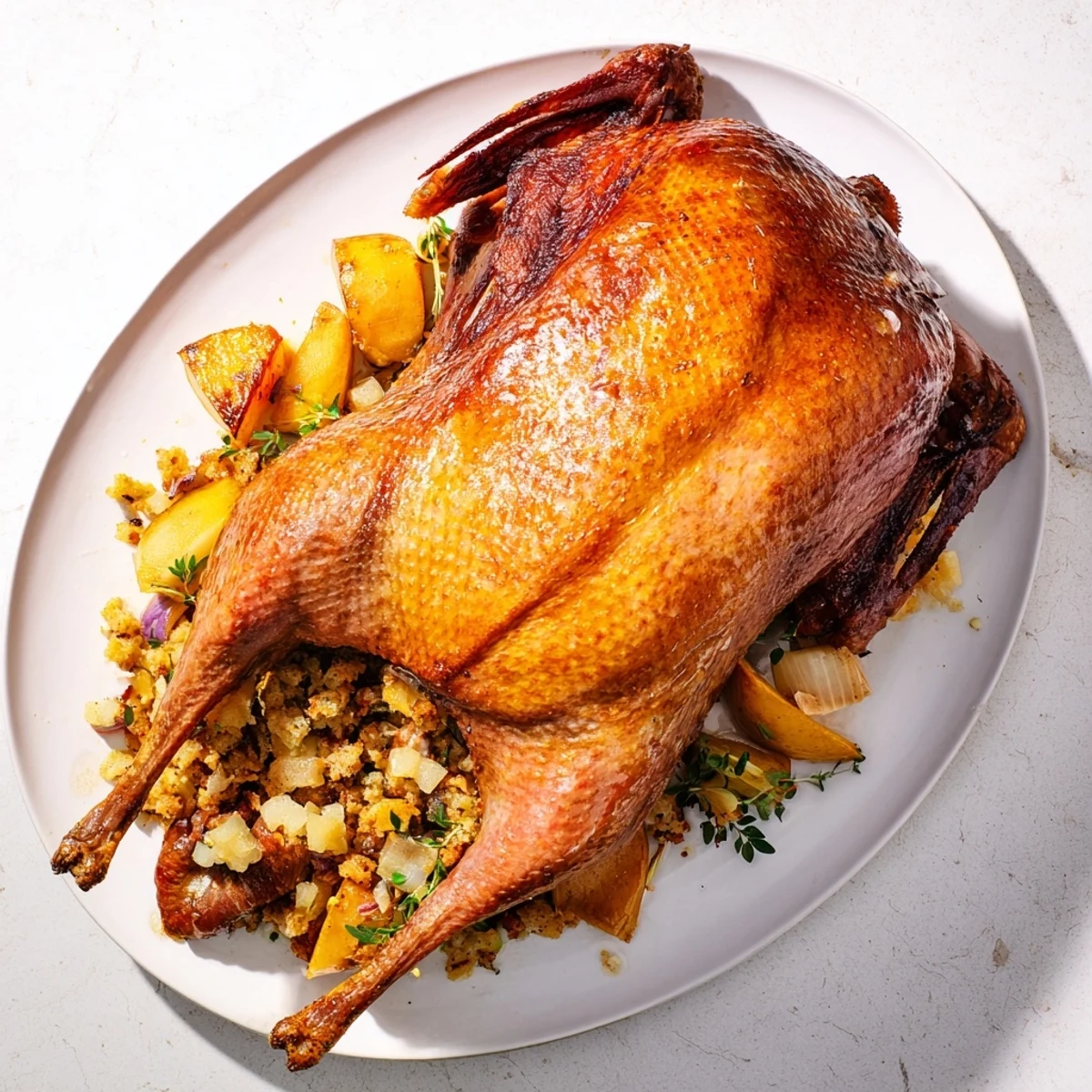
Save There's a moment right before serving when you step back from the table and see that golden goose sitting there, steam rising from the cavity, surrounded by the trappings of a proper celebration. Your guests haven't even tasted it yet, but somehow they already know this meal will be remembered. That's when cooking stops being technique and becomes connection.
Keeping It Fresh
Leftover goose can be a treasure if you treat it right. Store it in an airtight container in the refrigerator for up to three days. The meat shreds beautifully for sandwiches or can be warmed gently with a bit of stock. I often use leftover goose to make a rich risotto or to top a winter salad with some of those crispy skin pieces crumbled on top. It's like getting a second meal from your effort.
When You're Missing Something
Life happens, and sometimes you don't have fresh sage or fresh thyme. Here's what I've learned from improvisation in the kitchen. You can substitute with dried herbs, but use about one-third the amount since they're more concentrated. For the bread, if you can't find truly stale bread, cut fresh bread into cubes and let them sit on a baking sheet for an hour or two. The apples in the stuffing can be swapped for dried apricots or cranberries if you're missing them. The core of this recipe is flexible enough to work with what you have on hand.
Serving Ideas That Clicked
Over the years, I've found that goose pairs beautifully with sharp, tangy accompaniments. Braised red cabbage with a touch of vinegar and apple is classic for a reason. Roasted potatoes in that rendered goose fat are essential. A fruit compote, whether made from tart plums or spiced apples, cuts through the richness of the meat and makes every bite feel balanced. And if you're feeling adventurous, a mustard sauce or horseradish cream adds another layer of complexity.
- Serve the goose while it's still warm, not piping hot, so you can actually taste the subtlety of those herbs
- If you made extra stuffing in a separate dish, serve it warm from the oven for those who want more
- Don't forget to save the pan drippings, as they make an incredible gravy with a splash of stock and a touch of flour
 Save
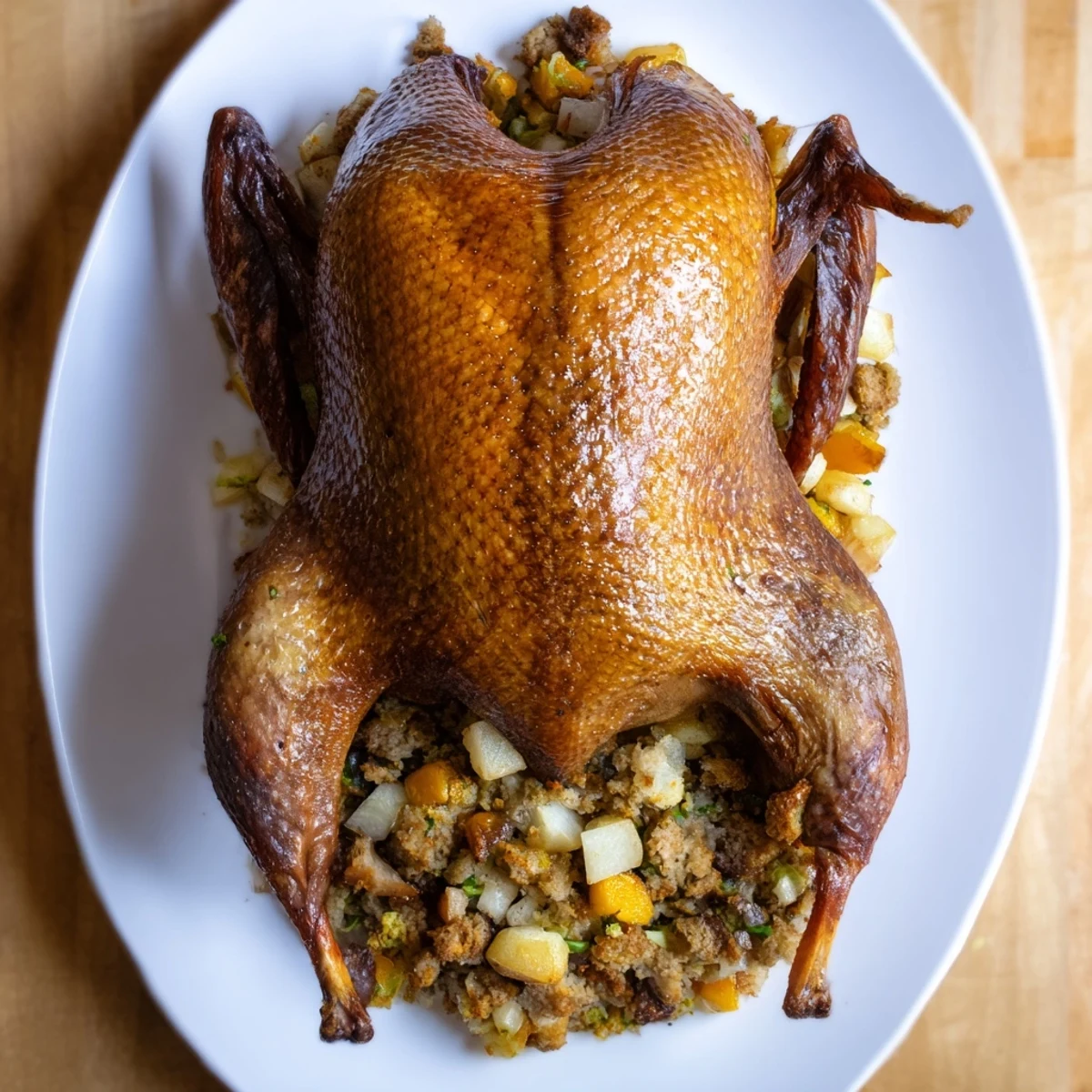
Save Roasting a goose is an act of love, whether you're cooking for family you've known your whole life or gathering with people who've become your chosen family. It says, I spent time thinking about this. I care about how you experience this meal. And that, more than any technique or ingredient, is what makes it truly special.
Recipe FAQ
- → How do I achieve crispy skin on the goose?
-
Dry the skin thoroughly before roasting and prick it carefully to render fat. Basting regularly and roasting at 180°C helps develop a crisp, golden exterior.
- → What herbs are best for the stuffing?
-
Fresh parsley, sage, thyme, and dried marjoram combine to create an aromatic and flavorful herb stuffing that complements the rich goose meat.
- → Can the stuffing be cooked separately?
-
Yes, excess stuffing can be baked in a separate dish to achieve extra crispness without overfilling the bird.
- → What temperature indicates the goose is fully cooked?
-
Insert a meat thermometer into the thickest part of the thigh; it should read 75°C (165°F) for safe, tender results.
- → How should the goose be rested after roasting?
-
Let the cooked goose rest loosely covered for at least 20 minutes; this allows juices to redistribute for more succulent slices.
- → What can I do with the rendered goose fat?
-
Save the rendered fat to roast potatoes or vegetables for added richness and flavor.