
 Save
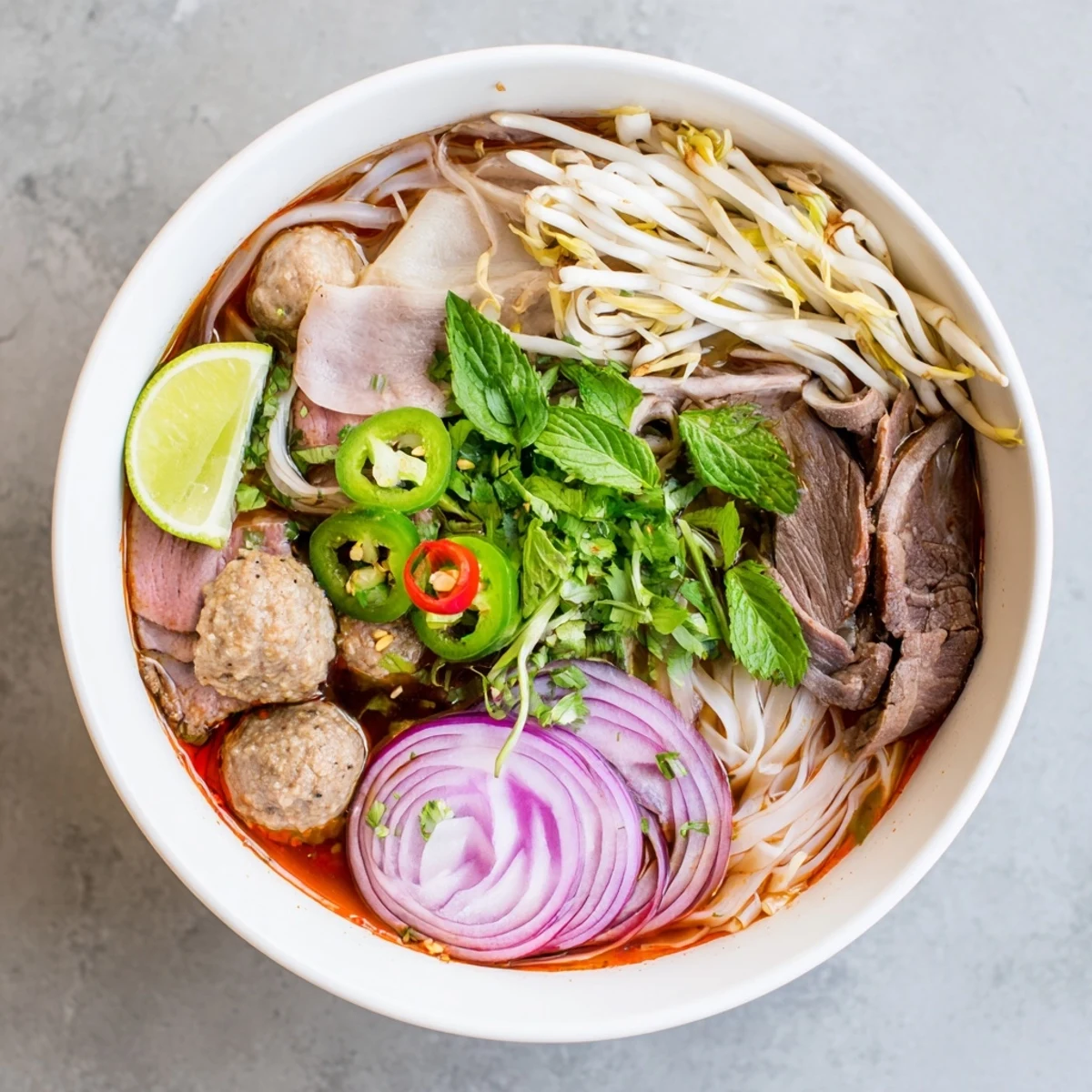
Save This beloved Vietnamese specialty from Hue delivers a complex broth simmered for hours with beef shank, pork hock, and aromatic lemongrass. The signature flavor comes from shrimp paste and chili oil, creating that distinctive spicy-sweet profile. Thick round rice noodles provide the perfect base for tender sliced beef, pork hock, and optional traditional toppings like blood cubes and Vietnamese sausage. Fresh herbs, bean sprouts, and lime wedges complete the bowl, offering bright contrasts to the rich, deeply flavorful broth. Perfect for those who appreciate bold Southeast Asian flavors and have time to let the broth develop its full depth.
The first time I encountered Bun Bo Hue was at a tiny family run restaurant in Saigon where the grandmother stirred a pot the size of a bathtub. She told me that patience and lemongrass were the only two secrets to the broth, and I have never forgotten the way the steam carried that intoxicating citrus perfume through the entire room. When I finally recreated it in my own kitchen, the smell alone transported me back to that humid afternoon.
My friend Linh came over last winter and we spent the entire afternoon tending to the broth, drinking tea and swapping stories while the kitchen filled with the most incredible aromas. When we finally sat down to eat, she took one sip and teared up, saying it tasted exactly like what her grandmother used to make before she passed away. That moment taught me that food carries memories we did not even know we were holding.
Ingredients
- Beef shank and pork hock: These bone in cuts provide the deep, rich foundation that makes the broth taste like it has been simmering all day
- Lemongrass stalks: Bruise them well with the back of your knife to release those citrus oils that define this dish
- Shrimp paste: Do not be intimidated by the smell, it transforms into something incredible in the broth
- Thick rice noodles: Look specifically for bun bo Hue noodles, they are rounder and more substantial than regular rice noodles
- Annatto seeds: These give the broth that signature reddish orange color without adding heat
- Fresh herbs: The combination of mint, Thai basil, and cilantro is non negotiable for that authentic finish
Instructions
- Prepare the broth foundation:
- Place the beef shank and pork hock in a large pot, cover with water, and bring to a rolling boil for 5 minutes. Drain and rinse everything thoroughly to remove any impurities that would cloud your broth.
- Build the aromatic base:
- Refill the pot with 3 liters of fresh water and add the cleaned meats along with bruised lemongrass, halved onion, smashed garlic, and sliced ginger. Bring to a boil and skim off any scum that rises to the surface.
- Season and simmer:
- Lower the heat and add fish sauce, salt, both sugars, and the shrimp paste. Let everything simmer gently for 2 hours until the meat is fork tender and the broth has developed a deep reddish brown color.
- Prep the meats:
- Remove the beef shank and pork hock, then slice them into bite sized pieces. Strain the broth through a fine mesh sieve and discard the solids, then taste and adjust the seasoning if needed.
- Make the chili oil:
- Heat the vegetable oil in a small pan and add annatto seeds if using them, cooking until the oil turns a vibrant red. Discard the seeds, then sauté shallots and garlic until fragrant before stirring in the chili flakes.
- Cook the noodles:
- Prepare the rice noodles according to the package instructions, drain well, and divide them among serving bowls. Simmer the pork blood cubes gently for 10 minutes if you are using them.
- Assemble each bowl:
- Top the noodles with sliced beef shank, pork hock, brisket, blood cubes, and cha lua. Ladle the piping hot broth over everything and finish with a drizzle of that aromatic chili oil.
 Save
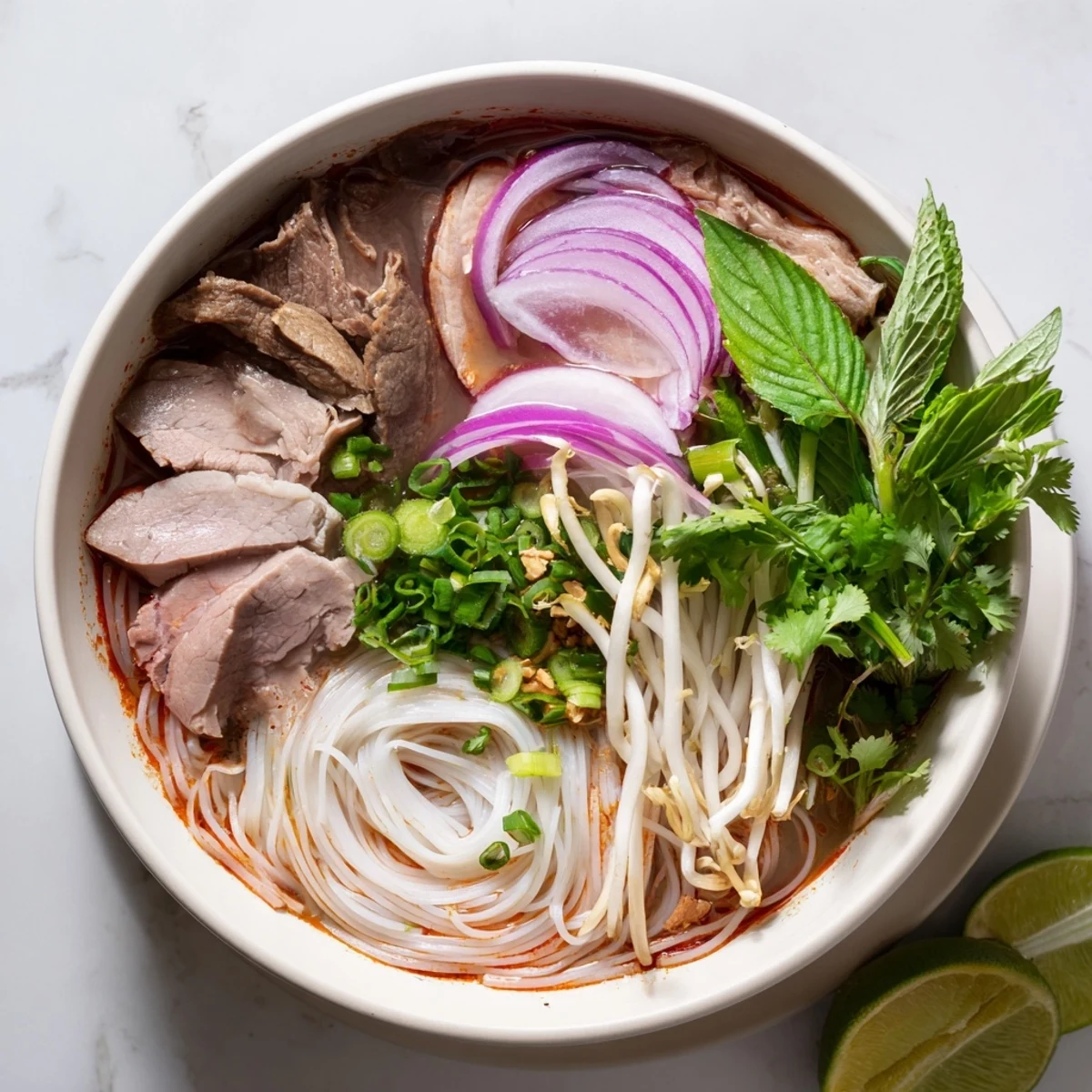
Save Last month my neighbor smelled the lemongrass wafting through the hallway and knocked on my door with a wistful smile. She ended up staying for dinner, showing me how her mother used to wrap the herbs in rice paper rolls to eat alongside the soup, and now I cannot imagine serving it any other way.
Mastering The Broth
I learned the hard way that rushing the broth phase results in a soup that tastes thin and one dimensional. The collagen from the bones needs time to break down completely, giving the liquid that velvety mouthfeel that coats your spoon. Skim the surface every 20 minutes or so to keep the broth crystal clear and remove any impurities.
Balancing The Heat
Bun Bo Hue is supposed to be spicy, but the heat should never overpower the complex flavors of the broth. I add the chili oil at the end so each person can control their own spice level, and I keep some extra lime wedges on hand to cut through the heat if needed. The goal is warmth that builds gradually, not fire that overwhelms.
The Art Of Garnishing
Do not skip the garnishes because they are not just decoration, they are essential to the experience. The bean sprouts add crunch, the banana blossom brings a subtle tartness, and the fresh herbs brighten every single bite. I arrange everything on a large platter and let guests build their own perfect bowl.
- Squeeze the lime into the broth just before eating to awaken all the flavors
- Add the herbs at the very last moment so they stay vibrant and fresh
- Keep some extra chili oil on the table for the heat lovers in your group
 Save
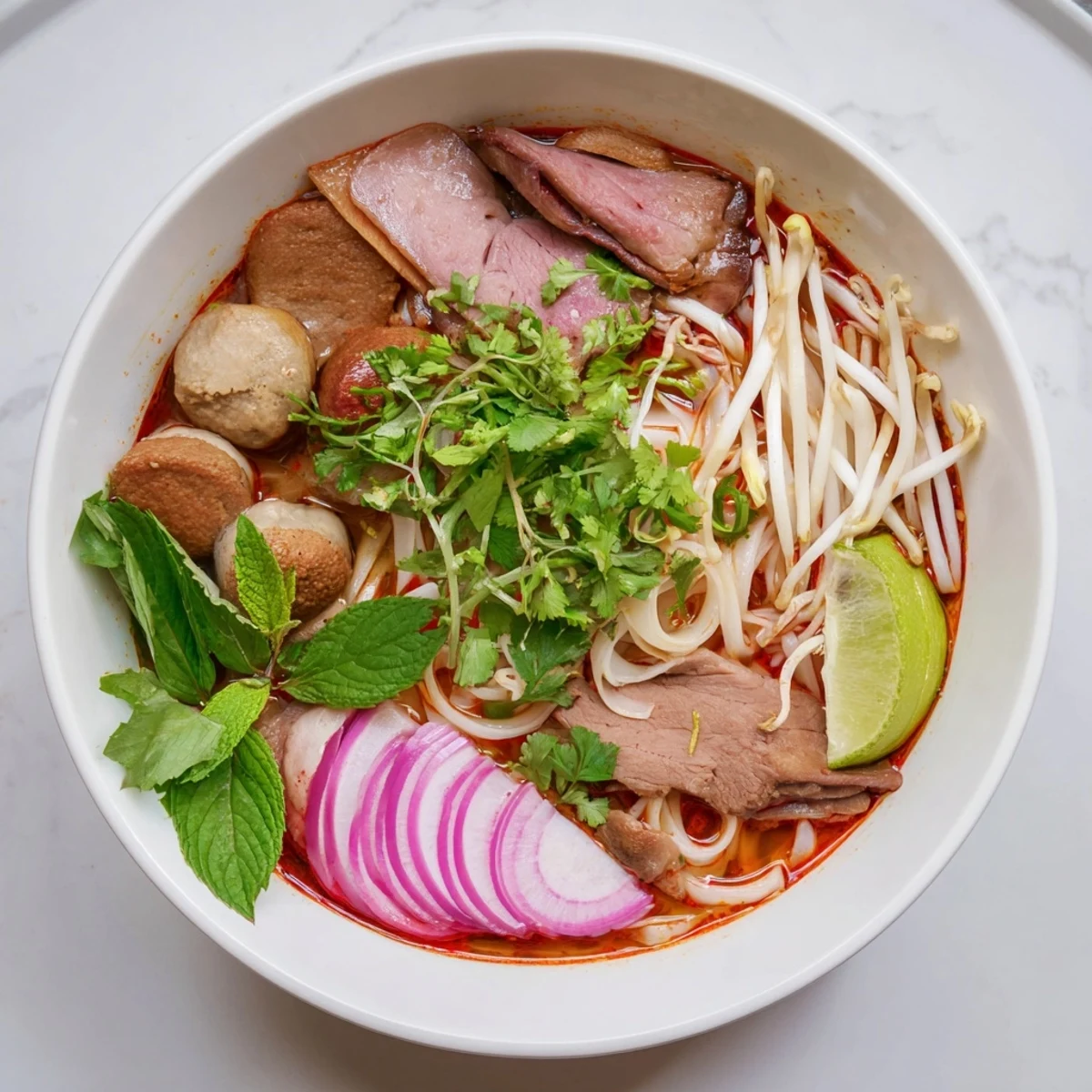
Save There is something deeply satisfying about ladling that steaming broth over a bowl of noodles and watching the steam rise up, carrying memories of kitchens and conversations shared across generations. Good food connects us.
Recipe FAQ
- → What makes Bun Bo Hue different from pho?
-
Bun Bo Hue features a spicier, more complex broth with lemongrass and shrimp paste, uses thicker round noodles, and includes pork hock alongside beef. The signature chili oil gives it a vibrant red color and extra heat that traditional pho doesn't typically have.
- → Is shrimp paste essential for the broth?
-
Shrimp paste (mam ruoc) provides the distinct depth and umami that characterizes this dish. While you can omit it, the flavor profile will be significantly different and less authentic to the traditional preparation.
- → Can I make the broth in advance?
-
Absolutely. The broth actually develops deeper flavor when made a day ahead. Let it cool completely, refrigerate overnight, then skim off any solidified fat before reheating. This saves time and intensifies the flavors.
- → What type of noodles work best?
-
Traditional thick round rice noodles (bun bo Hue noodles) are ideal as their texture holds up well in the spicy broth. Regular rice vermicelli can work in a pinch, but they're thinner and may become too soft during serving.
- → How can I adjust the spice level?
-
Control the heat by varying the amount of chili oil and fresh chili slices you add to individual bowls. Keep the chili oil on the table so diners can customize their spiciness preference.
- → Are pork blood cubes necessary?
-
Pork blood cubes are traditional but completely optional. Many Vietnamese restaurants outside Vietnam omit them due to availability or customer preference. The dish remains delicious without them.